We pour concrete, so read this knowing that. But we've replaced enough failed paver driveways in Bayside Lakes and enough failed concrete in Port Malabar to know that the material matters less than what's under it, and that each one fits some lots better than others.
Cost in 2026
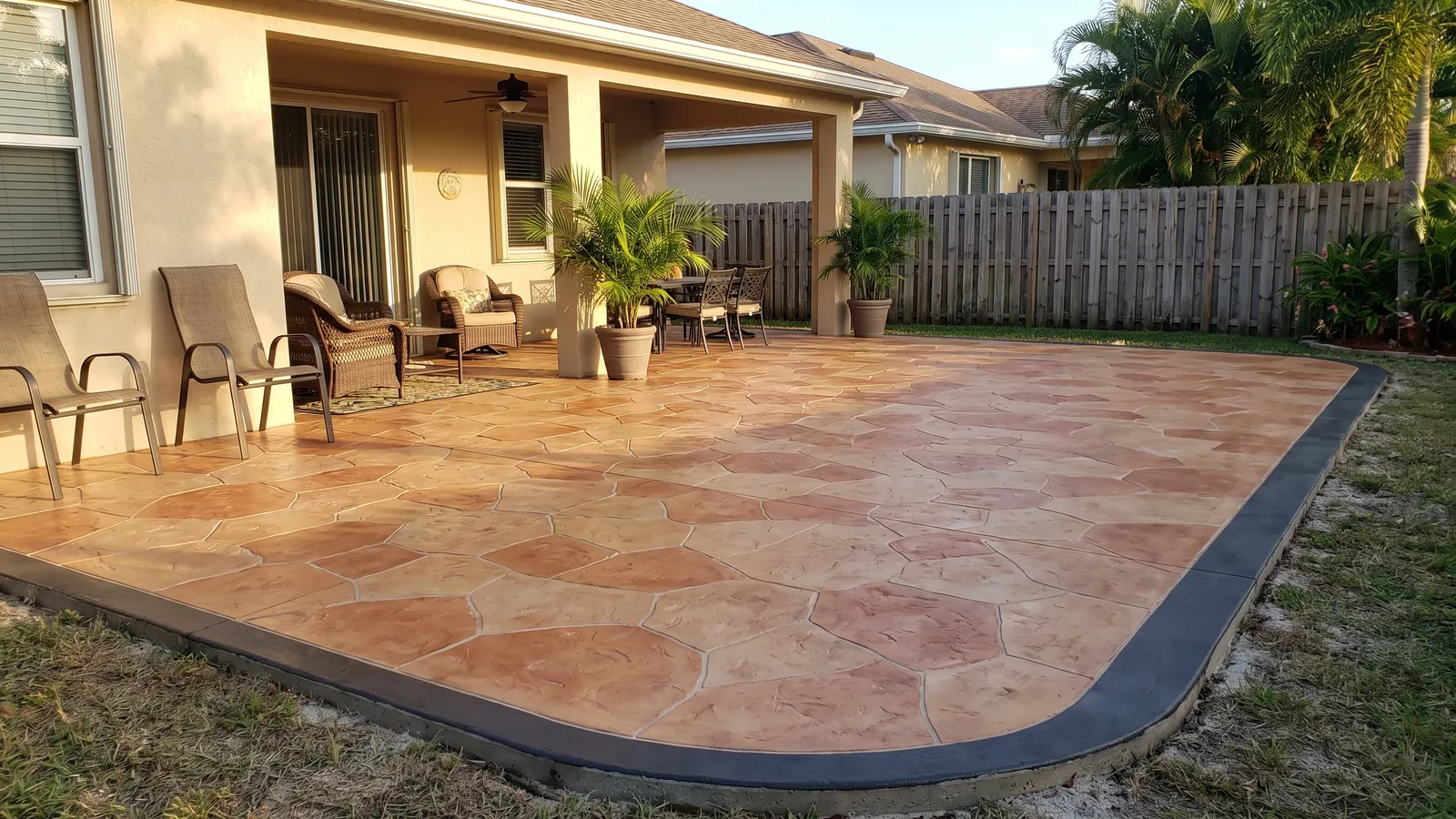
Broom-finished concrete: $7.50 to $12 a square foot. Stamped and colored concrete: $16 to $27. Concrete pavers, installed on a compacted base with edge restraint and polymeric sand: $14 to $24, more for thicker driveway pavers, clay brick or travertine. So a plain concrete driveway is roughly half the price of pavers, and a stamped one is about the same.
On Palm Bay sand
A paver field is a flexible surface: it moves with the base, which is good when the base moves a little and bad when it moves a lot. On the flatwoods sand here, with a foot of water table in September and a swale at the street, paver driveways develop sunken wheel paths within a few years unless the base was compacted crushed rock — which the boom-era installers rarely used — and paver aprons at the swale sink like any other apron, but in pieces. A concrete slab is rigid: it bridges small soft spots, and when the base fails it cracks or tilts as one piece, which foam lifting fixes in an hour. Neither material survives an uncompacted base or a washed-out swale.
Maintenance
Pavers need the polymeric sand in the joints redone every few years, and between times the joints grow weeds and host ant colonies; pavers under oaks stain and grow mildew in the joints; individual pavers pop, and a paver driveway needs an edge restraint that eventually heaves. Concrete needs a sealer every few years and a pressure wash. Pavers' one real advantage: if you have to get under the surface later — a septic drain field, a pool run, a broken sprinkler main — you lift them and relay them.
Salt, sun and heat
Pavers don't rust, which matters on the beachside where salt reaches the wire in a thin slab — but a properly built, sealed concrete slab with steel at cover lasts decades there too. Both get hot; lighter concrete colors and lighter pavers stay coolest, and a knockdown texture on concrete beats a smooth paver underfoot.
HOAs and the apron
Some associations — parts of Viera, some Bayside Lakes streets — expect pavers on the driveway and will approve a stamped concrete patio behind the house; others don't care. Whatever the field material, Palm Bay's Public Works permit for the apron applies the same way, and many homeowners with paver driveways have us pour a concrete apron at the swale because it holds up where the pavers sank.
The short version
Plain concrete for the driveway and the pads, stamped concrete for the patio if you want the look, pavers where the HOA demands them or where you'll need to get underneath later — and a compacted base and a draining swale under all of it.
Common questions
Can you pour concrete over my sunken pavers?
No — pavers have to come out, the base gets rebuilt, and the slab is poured on it. The old pavers can be reused as base if they're crushed, or stacked for you to keep.
Is stamped concrete as good-looking as pavers?
Up close, pavers are the real thing and stamped concrete is a very good imitation. From the street, most people can't tell. Stamped costs about the same and has no joints to maintain.
Which lasts longer?
A properly built concrete slab, 30 to 50 years. A paver driveway on a properly built base, similar — but the joints, the edge restraint and the wheel paths need attention every few years, and 'properly built' is rarer with pavers here.
Do you install pavers?
No. If your HOA requires them we'll recommend an installer we trust and pour the apron and pads that go with them.
Related: Stamped & decorative concrete · Concrete driveways · Driveway cost guide · Why slabs sink here