Shed, boat and RV pads in Palm Bay that hold what you park on them
A side-yard pad for the boat, a slab for the shed the Building Division will inspect, a pad for the generator at the installer's spec, or a parking pad for the fifth wheel — poured thick, reinforced, and high enough to stay dry in September.
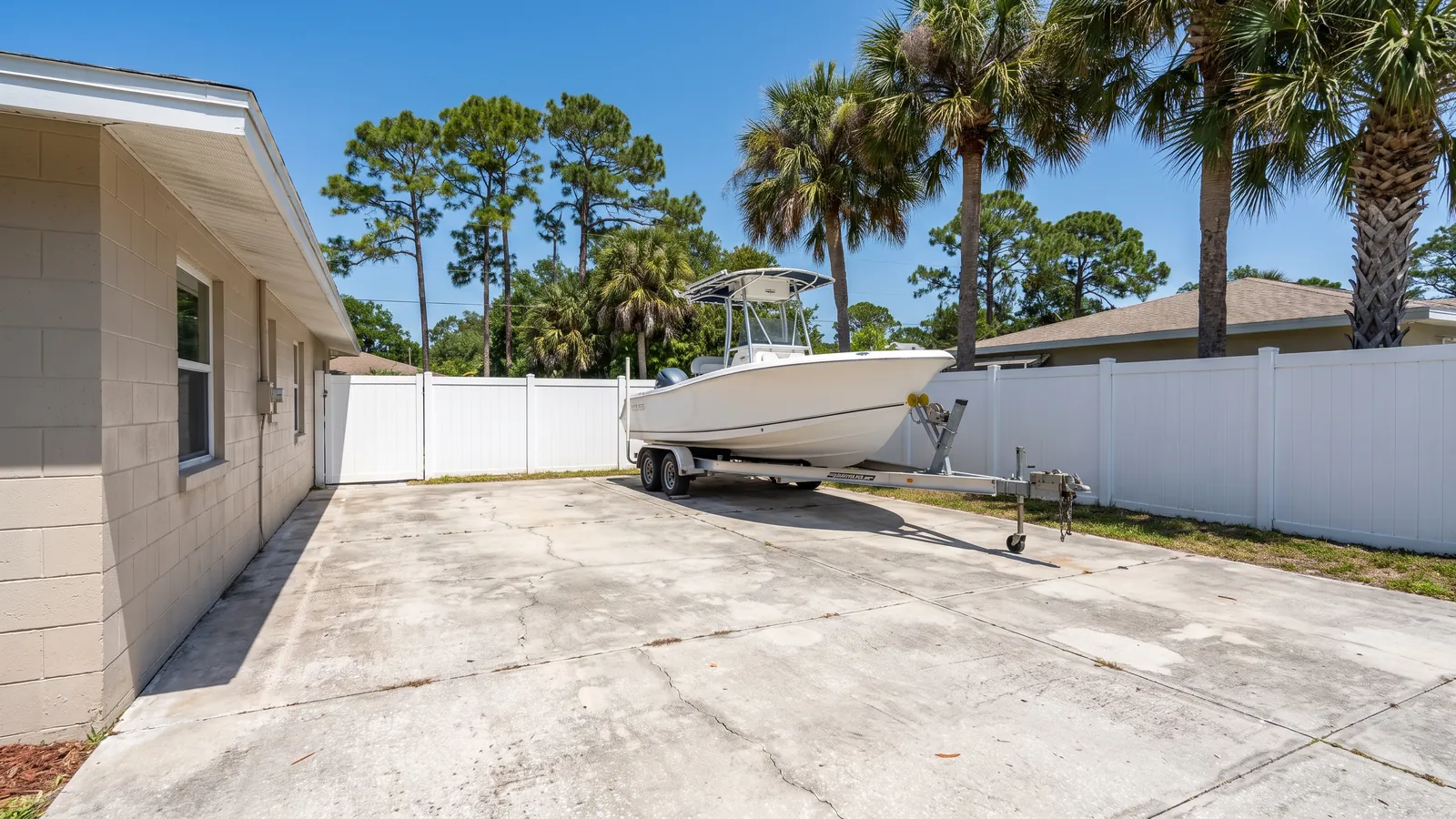
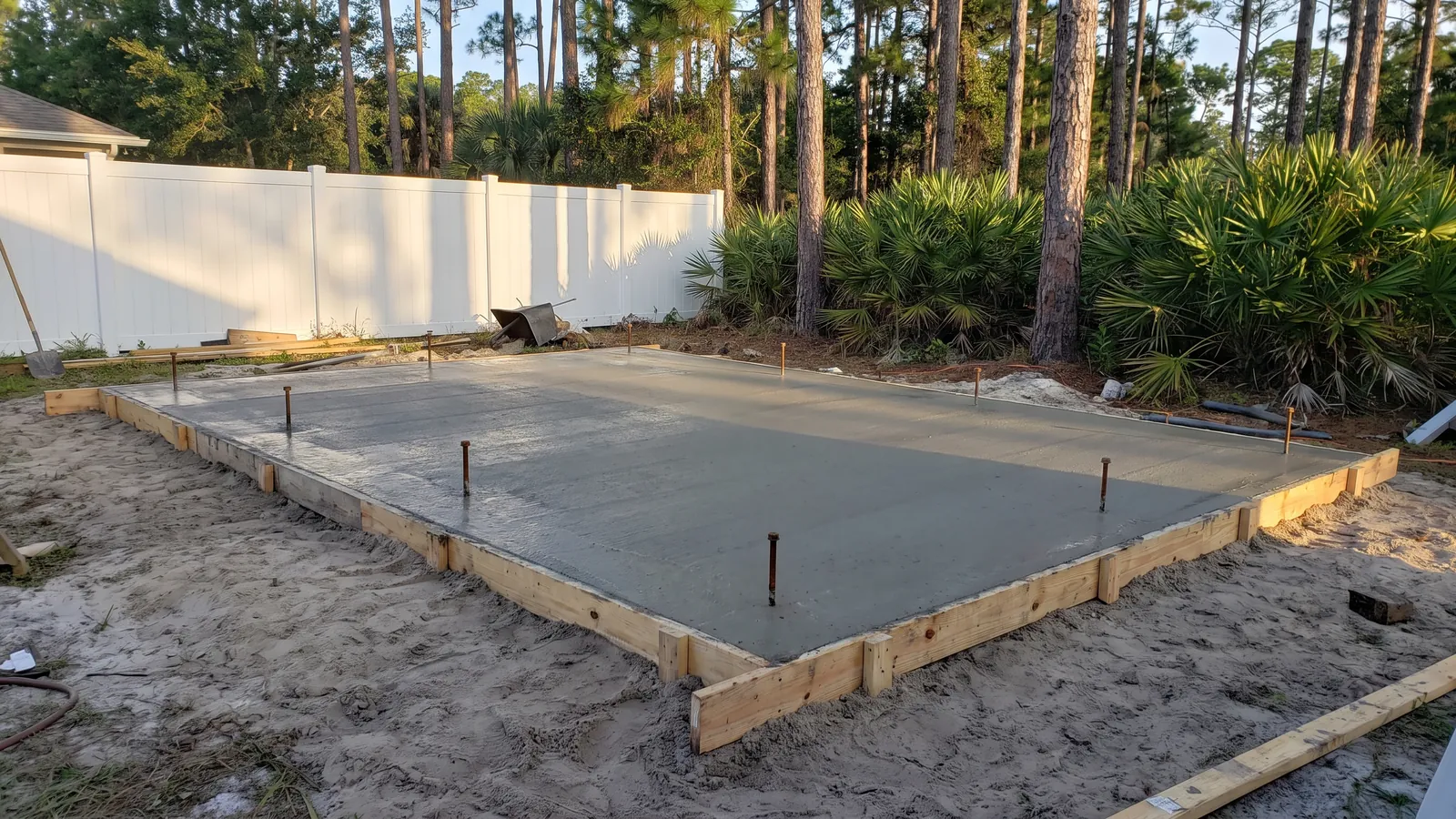
Palm Bay is boat country and RV country, and most lots — especially the quarter-acre GDC lots and the big SW and Compound parcels — have something parked on the grass that shouldn't be: a center-console on a trailer sinking a tire into the sand every wet season, a fifth wheel with jack pads on plywood, a shed on blocks that's racking. We pour the pad it should be sitting on. Boat and RV pads get five to six inches of 3,000 psi fiber-reinforced concrete over compacted sand with #4 rebar on a grid and a thickened edge where the trailer tires and jacks land, sloped just enough to drain and set at a grade that stays above the water table. Shed slabs get turned-down edges and anchor bolts on the shed manufacturer's layout, because Palm Bay's Building Division permits sheds and inspects the slab and the tie-downs under the Florida Building Code's wind rules.
Generator pads are poured to the installer's spec — usually a four- to six-inch slab a few inches proud of grade, sized to the unit, with the conduit sleeves where the electrician wants them; the generator itself is a Building Division permit that the installer pulls. A/C pads, pool-equipment pads, well and softener pads and hot-tub pads are the same idea at smaller scale. On every one we check the setbacks, the FPL and drainage easements that run along many GDC lot lines, and the HOA rules where there is one, so the pad isn't in a place you'll have to move it from.
What's included
5–6 inches under wheels
Boat, RV and trailer pads at five to six inches with #4 rebar on a grid and thickened edges where tires and jacks land.
Shed slabs to the permit
Turned-down edges and anchor bolts on the manufacturer's layout, poured to pass the Building Division's slab and tie-down inspections.
Above the wet-season grade
Base built up and compacted so the pad stays dry in a September rain instead of sitting in a puddle.
Sleeves and conduits
Electrical and fuel sleeves set for generators; drain sleeves for pool equipment and hose bibs where needed.
Setbacks and easements checked
Side- and rear-yard setbacks, FPL and drainage easements and HOA rules confirmed before the forms go in.
Access for the pour
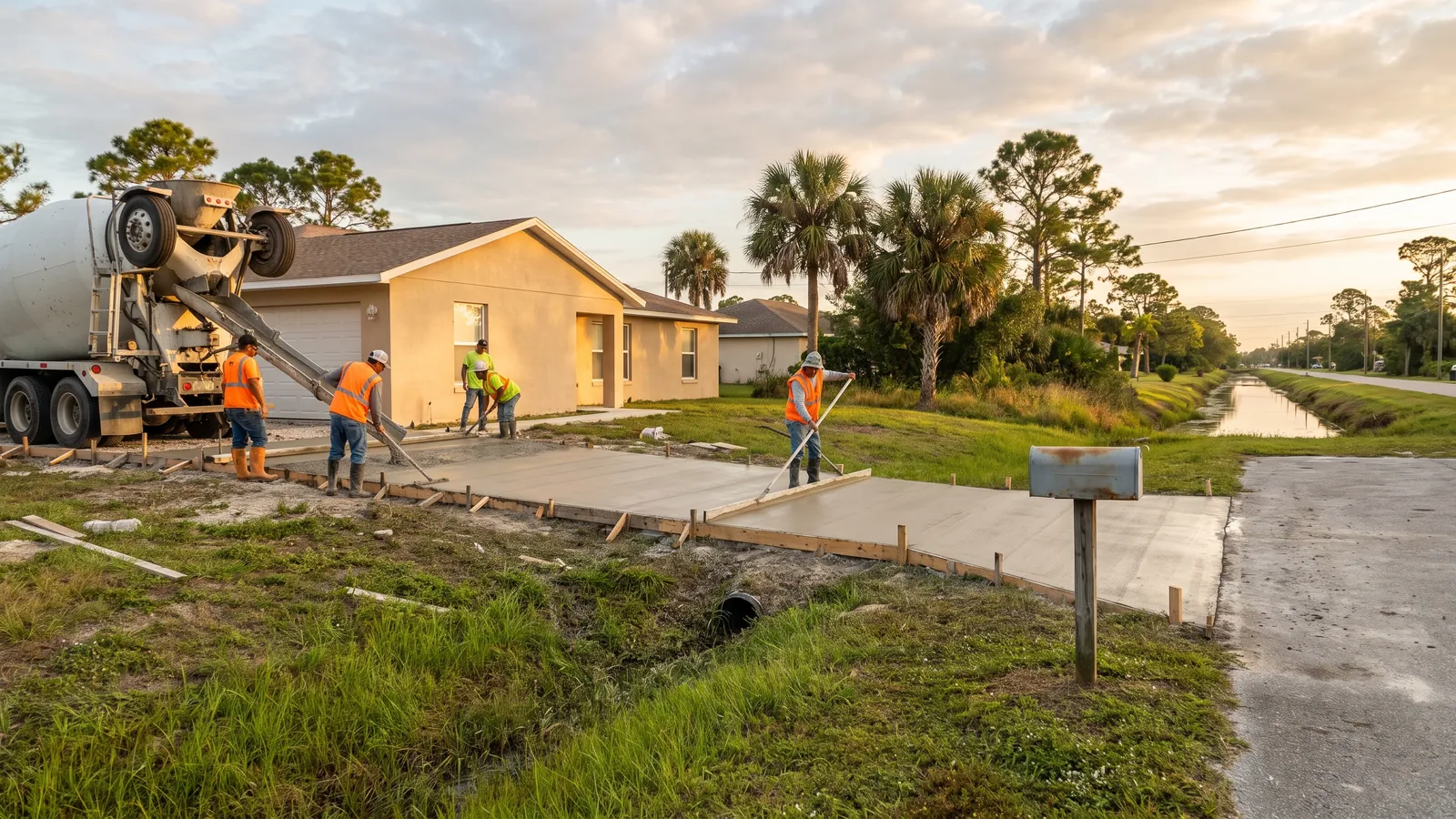
Side-yard pads often need a pump or a buggy; we plan the route so the truck doesn't crush your swale culvert.
Shed, boat and RV pad cost in Palm Bay, FL
| Job | Typical price | Notes |
|---|---|---|
| Boat pad, 12'×30', 5–6" reinforced | $3,400 – $5,800 | Rebar grid, thickened edges |
| RV or fifth-wheel pad, 14'×45', 6" reinforced | $6,000 – $10,500 | Jack-pad zones thickened |
| Shed slab, 10'×12' – 12'×16', turned-down edges + bolts | $1,600 – $3,200 | To the shed permit |
| Generator pad to installer spec | $550 – $1,300 | Sleeves included |
| A/C, pool-equipment or hot-tub pad | $450 – $1,600 | Size-dependent |
| Gravel-to-concrete conversion (existing gravel pad) | $2,800 – $5,200 | Gravel reused as base |
These are 2026 Brevard County ranges so you can budget. Your written price is itemized — demolition and haul-off, base, thickness and steel, finish, joints, sealing, permit — and good for 30 days.
Recent work
Questions we get about shed, boat & rv pads
Do I need a permit for a shed slab in Palm Bay?
The shed does — Palm Bay's Building Division lists sheds among the projects that require a permit, and the slab, the anchor bolts and the tie-downs are inspected as part of it under the Florida Building Code, 8th Edition. We pour the slab to the shed manufacturer's engineering and the permit drawing so it passes. A bare parking pad on your own lot generally doesn't need a building permit, but setbacks still apply.
Can I park a boat or RV in my side yard in Palm Bay?
On most single-family lots, yes — behind the front plane of the house, on a hard surface, within the setbacks, and subject to your HOA if you have one. Bayside Lakes and several of the newer SW communities restrict or prohibit visible boat and RV parking; the older GDC units generally don't. We'll tell you what we see in your deed restrictions, but confirm with the city's Code Compliance or your association before you buy the pad.
How thick does a pad for a fifth wheel need to be?
Six inches with #4 rebar on 18-inch centers, thickened to eight at the jack and tire zones, over at least six inches of compacted base. A 12,000-pound fifth wheel puts most of its weight through four small pads, which is why plywood on grass doesn't work.
How soon can I put the boat on it?
Fourteen days for a boat or RV, seven for a shed to be set, two days for a generator installer to bolt a unit down.