GO Roads paving and your driveway: what changes when the city rebuilds your street
Palm Bay voters approved $150 million in 2018 to fix the roads, and more than 418 miles are done. When your street is next, here's what happens to the swale, the culvert and the apron — and what's yours to fix.
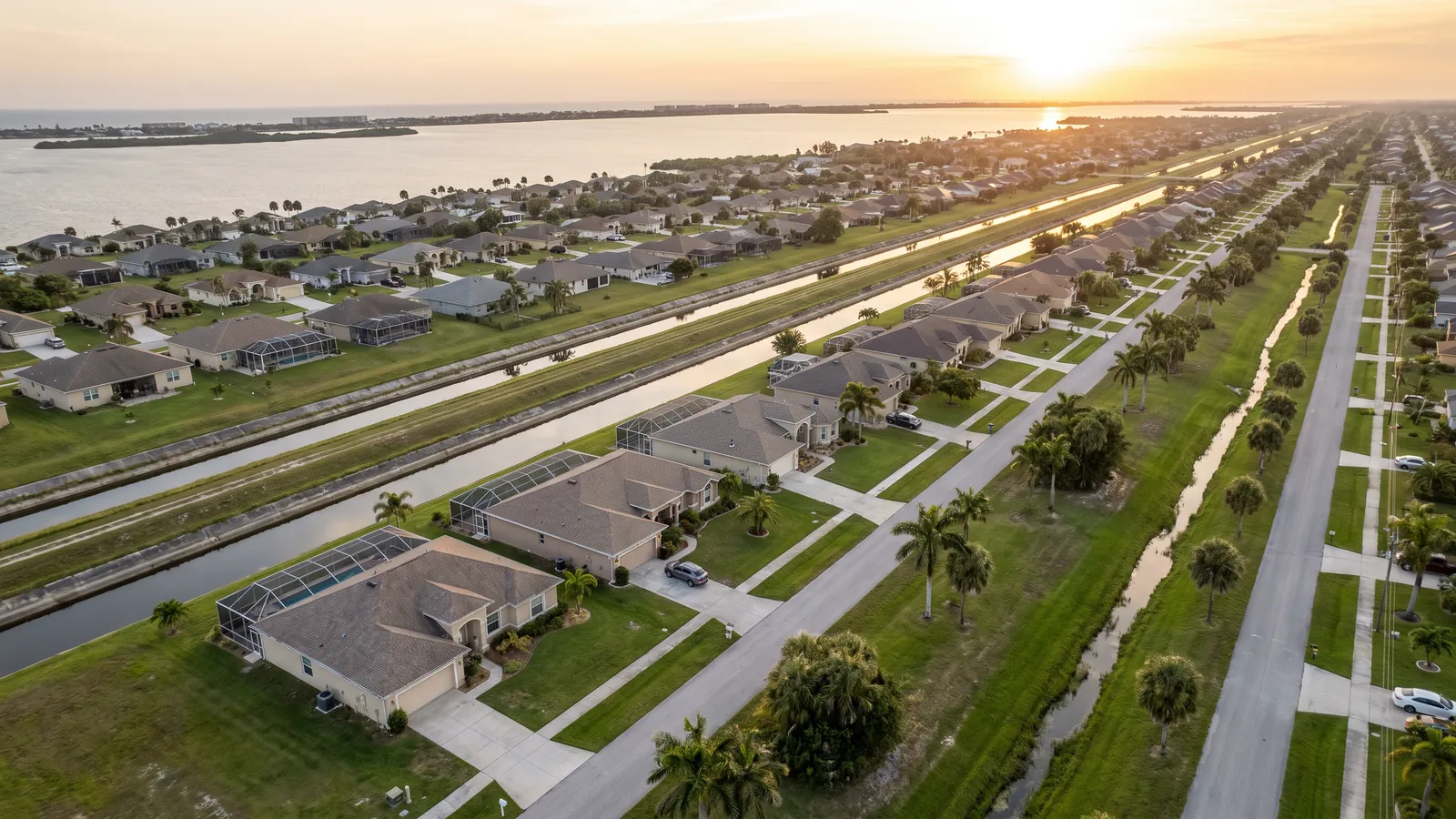
In November 2018 Palm Bay voters approved the GO Roads bond — $150 million to rebuild a road network that GDC laid out in the 1960s and the city could never afford to maintain. As of 2026 the city reports more than 418 miles of road improvements across Eldron, Garvey, Port Malabar, the Emerson sections, Palm Bay Colony, the Country Club units and the Kirby industrial area; Phases 1 and 2 are complete, Phase 3 is about half done with the rest out for bid, Phase 4 is funded and in design, and Phase 5 is unfunded while the city looks for money. Depending on the street's condition the work is milling and paving, thin-lift overlays, full-depth reclamation (grinding the old asphalt and base together and repaving on top), or full reconstruction. For a driveway, the last two matter.
What changes when your street is rebuilt
A mill-and-pave or an overlay usually raises the road surface an inch or two and leaves the swale alone; your apron ends up a little below the new edge, and a thin asphalt wedge from the paving crew often covers it. Full-depth reclamation and reconstruction are different: the road may be raised or lowered several inches, the crown reset, and the swale and culvert crossings regraded to a new profile so the street drains. After that, the apron that met the old pavement can be a step below the new one or a hump above it, the culvert may no longer match the new swale invert, and the swale in front of your lot has been re-cut — sometimes with your old mitered ends sticking out of it at the wrong angle.
Whose job is which
The road, the swale profile and the drainage are the city's, and the GO Roads contractor is responsible for restoring what the project disturbs in the right-of-way. The driveway apron that has to meet the new grade is generally the homeowner's — it serves your lot, and under Code § 176.020 its construction, alteration or repair is permitted to you through Public Works. In practice: if the contractor damaged your apron or left the swale unfinished, call the city's project line first and get it on the punch list; if the apron simply doesn't meet the new grade because the grade moved, that's a new apron under a Driveway and Lot Drainage permit.
What the fix looks like
We cut out the old apron on a saw line at the point where it meets grade, check the culvert against the new swale invert and replace the pipe if it's now too high, too low or crushed by the paving equipment, pour new mitered ends to the new swale, and pour a five- to six-inch reinforced apron from the driveway to the new road edge, pitched so the street doesn't drain onto your driveway. Public Works furnishes the pipe and grade spec with the permit, inspects before the pour (7000) and after (7010), and the swale is regraded and sodded. Two to three days on site, a few days to a couple of weeks for the permit, $1,800 to $5,200 depending on whether the pipe is replaced.
Before the paving crew arrives
If you're on a scheduled street and your apron is already failing, wait — don't pour a new apron to a grade that's about to change. If you have a new driveway planned, tell us and we'll pour the on-lot slab now and the apron after the road is done. And move the cars: the rejuvenation and paving crews need the street clear during the work hours the city posts.
Common questions
How do I find out if my street is on the list?
The city's Public Works GO Roads project page lists the units and streets by phase and posts lane-closure and paving notices. Call Public Works at (321) 952-3437 if you're not sure which phase your unit is in.
The paving crew put an asphalt wedge on my apron. Is that permanent?
It's the contractor's transition, and it lasts a few years before it breaks up. It's fine as a stopgap; when it goes, or when you replace the driveway, a concrete apron to the new grade is the real fix.
Will the city pay for my new apron?
Not usually, unless the contractor damaged it. The city restores the right-of-way; the apron that serves your driveway is yours. Ask the project line first — it's worth the call — and then get it permitted and poured properly.
Can I replace the whole driveway at the same time?
Yes, and if the old one is at the end of its life it's the efficient time: one mobilization, one permit for the apron, and a driveway that matches the new road for the next forty years.
Related: Culverts & swale aprons · Concrete driveways · Permits & swales guide · NE Palm Bay & Port Malabar